
Research Codename: Tendril

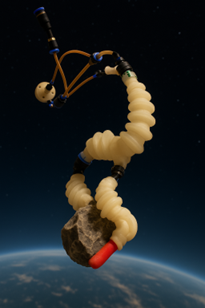
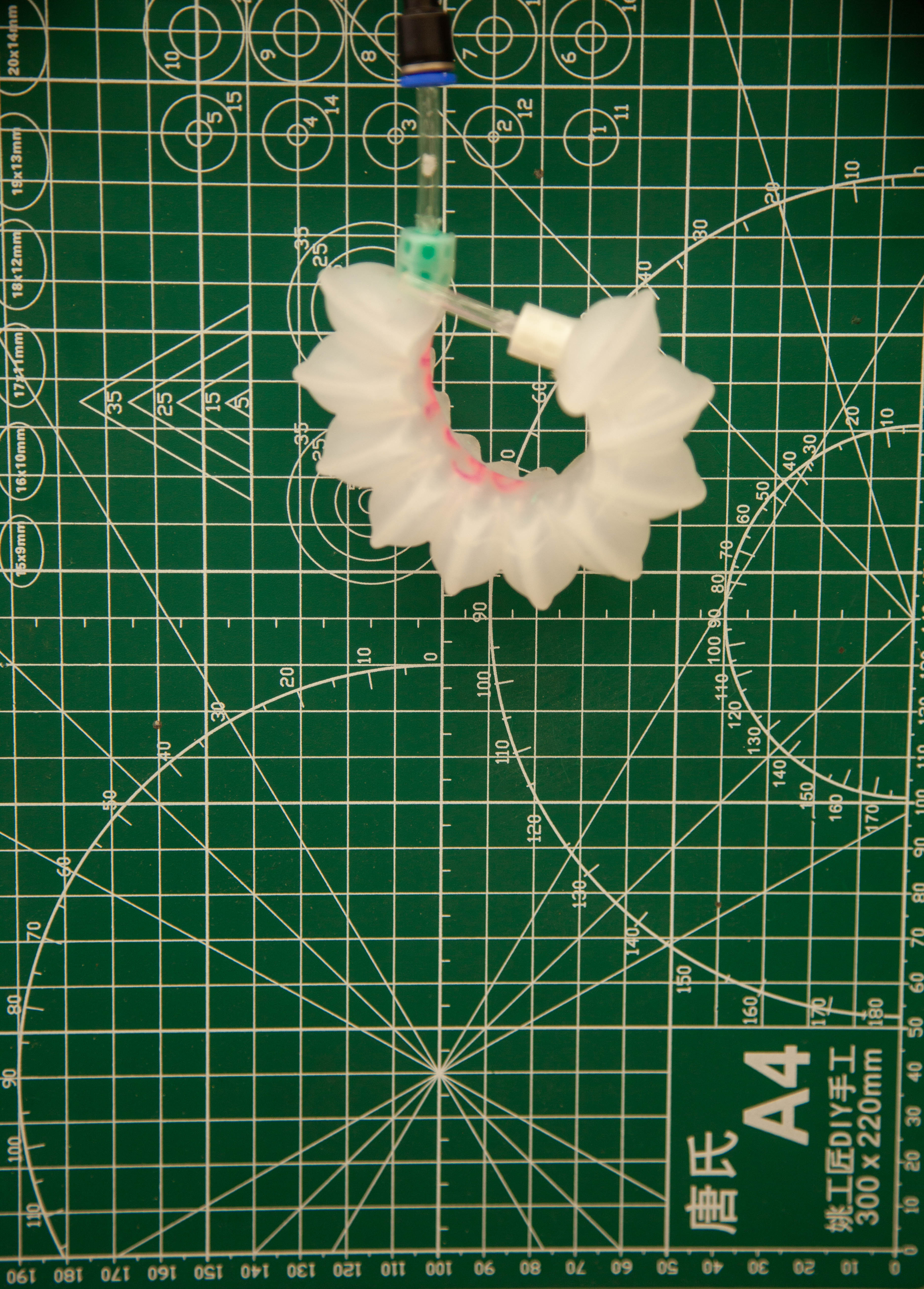
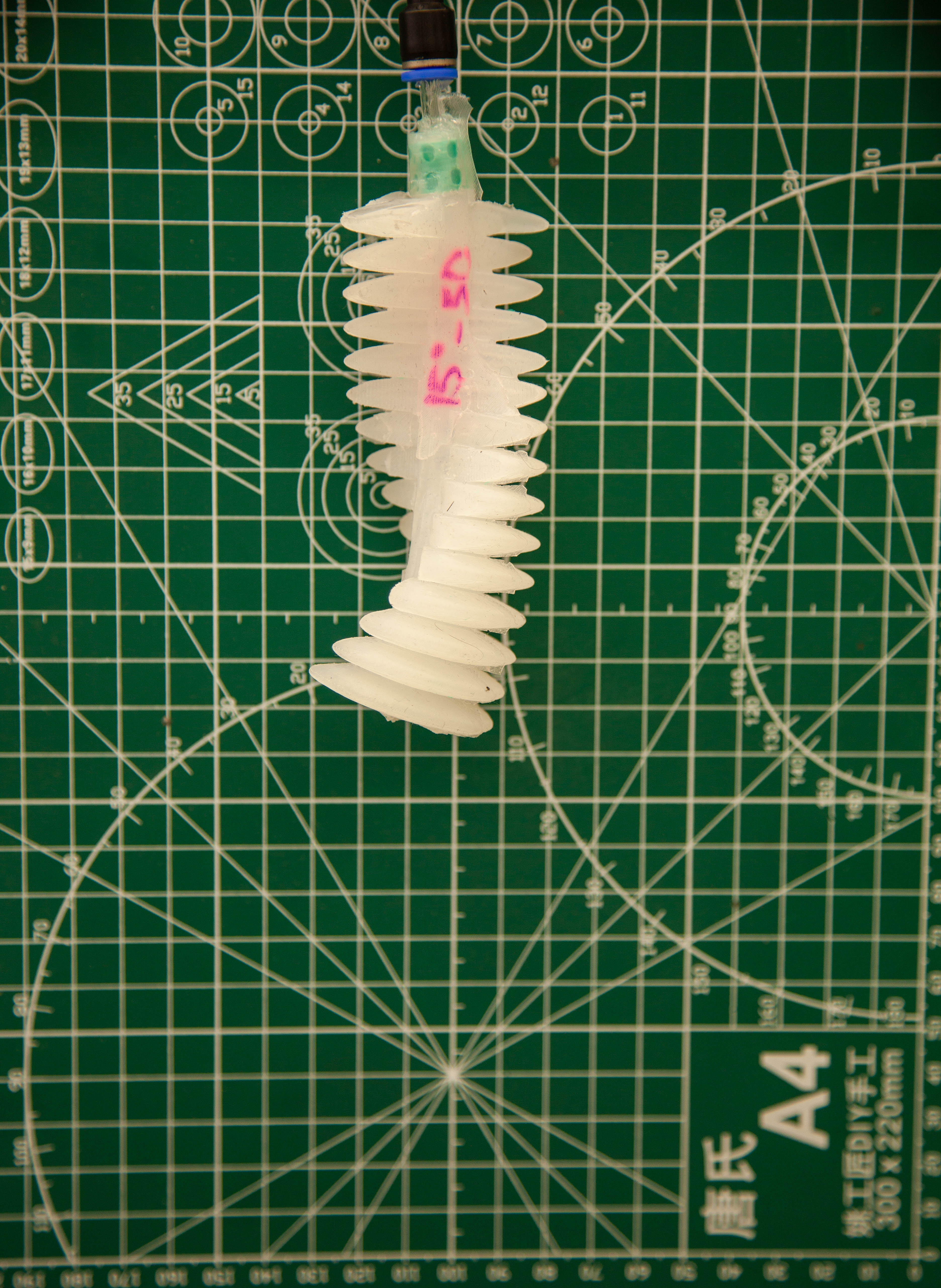

Tendril Arm Gripper (Patent pending)
Tendril Arm Prototype – The integration of pneumatic actuation within soft robotic systems has further enhanced their ability to apply gentle, finely tuned forces, enabling machines to interact delicately with sensitive and fragile items. DC:II in close collaboration with the City College of New York developed a tendril-inspired robotic gripper that can achieve sophisticated motions with the project codenamed Tendril.
While recent technological advancements have significantly improved the precision of gripping force control, traditional rigid grippers continue to face considerable challenges when handling fragile, delicate, or irregularly shaped objects — even with the development of sophisticated multi-phalange designs. In response to these limitations, soft robotics has emerged as a promising solution, utilizing flexible materials such as polymers to create grippers that better conform to and securely grasp a wide range of objects.
The integration of pneumatic actuation within soft robotic systems has further enhanced their ability to apply gentle, finely tuned forces, enabling machines to interact delicately with sensitive and fragile items. However, despite these advancements, the current generation of soft grippers remains largely limited to basic hold-and-release functions. Their operation typically mimics simple finger-like gripping or relies on negative air pressure (vacuum-based methods) to capture and retain objects.
These conventional soft grippers lack the ability to perform more sophisticated, controlled motions such as extension, curling, and spiraling. Such complex movements are critical for tasks requiring the capture of irregularly shaped objects from a distance or achieving a secure, omnidirectional grip. The absence of these capabilities constrains the broader applicability of soft robotics in dynamic, real-world environments.
To unlock the full potential of soft robotics, significant advancements are needed. Developing grippers capable of executing nuanced, multidirectional motions will be key to enhancing their versatility, expanding their operational scope, and enabling their deployment across a wider range of industries — from advanced manufacturing and healthcare to law enforcement and beyond.
 Da Capo Innovations, Inc.